
For most people watching a horse pull up lame on a racetrack, the assumption is a grim one. A broken leg means the end. But Rachael Smith, specialist equine surgeon at the Rangiora Vet Centre Equine Hospital, wants to change that narrative, and she has a filly named Dora to help make the case.
Rachael joined the Rangiora Vet Centre four years ago as its first full-time equine surgeon, building out the surgical and hospital caseload to serve North Canterbury and the upper South Island. The hospital is well-equipped, and holds a distinction that matters enormously in fracture cases: it is one of only two facilities in New Zealand with equine CT imaging, the other being Massey University.
That combination of surgical expertise and advanced imaging puts Rangiora in a unique position when an injured horse arrives through the door. Or, more precisely, when one arrives via the NZ Horse Ambulance.
What happens first, matters
Rachael is clear on this point. The outcome of a fracture repair is not determined solely in the operating theatre. What happens in the minutes and hours before a horse reaches the hospital can be the difference between a fracture that is repairable and one that is not.
"Part of that is being able to get to the horse quickly before a fracture that might just be a crack propagates into a more complex fracture," she explains. "Where that happens is often when the horse is stressed, when it first occurs and during transport, because they have to stabilise so much. They've got to go up ramps, down ramps, and they’re usually not supported."
The horse ambulance addresses exactly this. The walk-in, walk-out design means an injured horse does not have to navigate a ramp, and the crush can come to the horse to help stabilise it en route. The team arrives with the knowledge to splint, bandage, and support a limb correctly for transport. These details, Rachael says, are easy to underestimate.
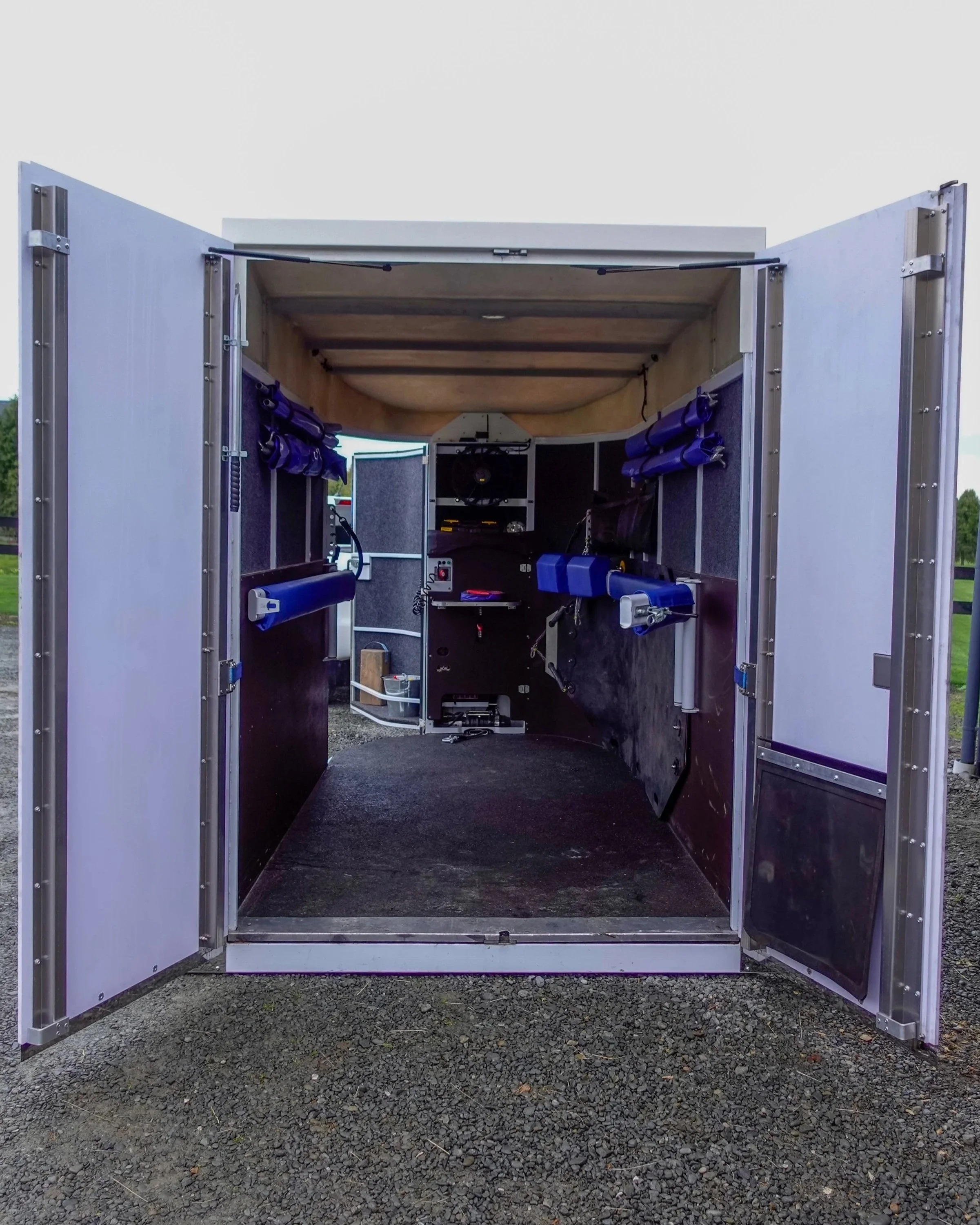
"It doesn't seem that important. It seems like the horse just has to get surgery and we just have to do surgery. But it's those things that are done before the fracture can be surgically stabilised that really count."
Rachael and her team have received several fracture cases from the NZ Horse Ambulance where the limb has been well stabilised on arrival, and the horse has been calm. That matters clinically. A stressed horse in pain, poorly supported during transport, can turn a manageable fracture into something far more complex before it ever reaches the operating table.
A Sunday, a snowstorm, and a collaborative repair
A young filly called Adored Dreamer, known as Dora, arrived at the Rangiora Vet Centre Equine Hospital via the horse ambulance after sustaining an acute fracture during racing. The preliminary X-rays indicated a comminuted fracture, extending from the fetlock to the pastern joint, with fragmentation in the lower part of the bone. It was a serious injury. Many vets and owners, faced with that X-ray, would have made a different call.
This is where the CT became critical. Rather than proceeding to surgery immediately, the team stabilised Dora in a cast overnight and took her to CT the following morning before going straight into theatre to repair the fracture. The imaging revealed what X-rays had missed: fracture lines that were radiographically silent but would have caused serious problems had screws been placed without accounting for them.
The repair was a team effort in every sense. Rachael consulted with her colleague and mentor Brian Anderson, a surgeon based in Ballarat, Australia. Because Rachael is the sole surgeon at Rangiora, she regularly workshops complex cases with Brian. On this occasion, Brian gave up his Sunday to review the CT images remotely and assist with surgical planning in real time, advising on screw placement as the repair progressed.
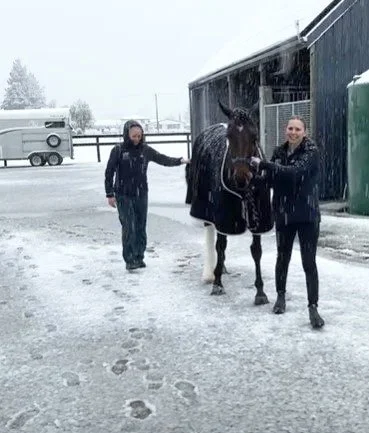
"It was such a memorable day," Rachael recalls. "It was a clear Sunday morning, and the whole team was assembled and prepped. We went into surgery, and four hours later, after the prolonged fracture repair, we came out, and it was snowing heavily. Here we were, walking Dora out of the recovery box to the barn with an inch of snow on the ground!”
From the operating table to the paddock
Dora spent time in hospital with cast support while the team monitored the fracture's repair. Her owners were, in Rachael's words, "very dedicated" and valued her not only as a racehorse or broodmare, but a member of their team. The fracture repair healed successfully and Dora was soon out in the paddock with no lameness at all.
At the time of this interview, Dora was due to have her first foal.
"We all keep involved as she has stayed locally at one of the studs’ Rangiora Vet Centre services”. Rachael says. "It's nice to get updates on how she is going and we can’t wait to see her foal”.
It is the kind of outcome that does not happen without a chain of good decisions, good people, and good timing, starting from the moment the horse ambulance arrived on course.
Changing the narrative around equine fractures
Rachael is thoughtful about how the public perceives breakdown injuries in horses.
"I have friends that are always like, 'I thought any horse with a broken leg just had to be put down,'" she says. "I'd really like to move away from that narrative. There are many fractures that are very amenable to repair for good welfare outcomes, and we don't always know that at the time of injury."
What the horse ambulance provides, in practical terms, is the ability to move a horse safely from a high-stress, high-pressure environment to somewhere calm, where accurate imaging can be acquired and informed decisions can be made without external pressures driving the outcome.
"The beauty of the horse ambulance is that we can take a very stressful situation and relocate it to somewhere that's calmer, where we can get accurate imaging and make informed decisions in a timely manner."
That, for Rachael, is the point. Not every fracture will have Dora's outcome. But every horse deserves the chance to find out.